
The Medes Islands, that natural treasure off L'Estartit, are a sanctuary of marine life where biodiversity flourishes in all its splendour. And if there is one inhabitant that embodies the majesty and health of this ecosystem, it is the grouper (Epinephelus marginatus). Known as the "lion of the underwater savannah", this imposing fish is the top predator in the Medes food chain, a true indicator of the richness of its waters.
Why So Many Groupers in the Medes Islands?
The abundance of groupers in the Medes Islands is no coincidence—it is the result of decades of strict protection policy. Since being declared a Marine Reserve in 1983, and later as part of the Montgrí, Medes Islands and Baix Ter Natural Park, fishing has been banned and diving regulated, allowing populations of vulnerable species, such as the grouper, to recover spectacularly.
The presence of large numbers of groupers means the ecosystem is healthy and balanced. As high-level predators, their prosperity indicates there is enough food at the lower levels of the food chain, from small fish to crustaceans and cephalopods—their favourite prey. They are, in essence, the guardians of the health of this underwater paradise.
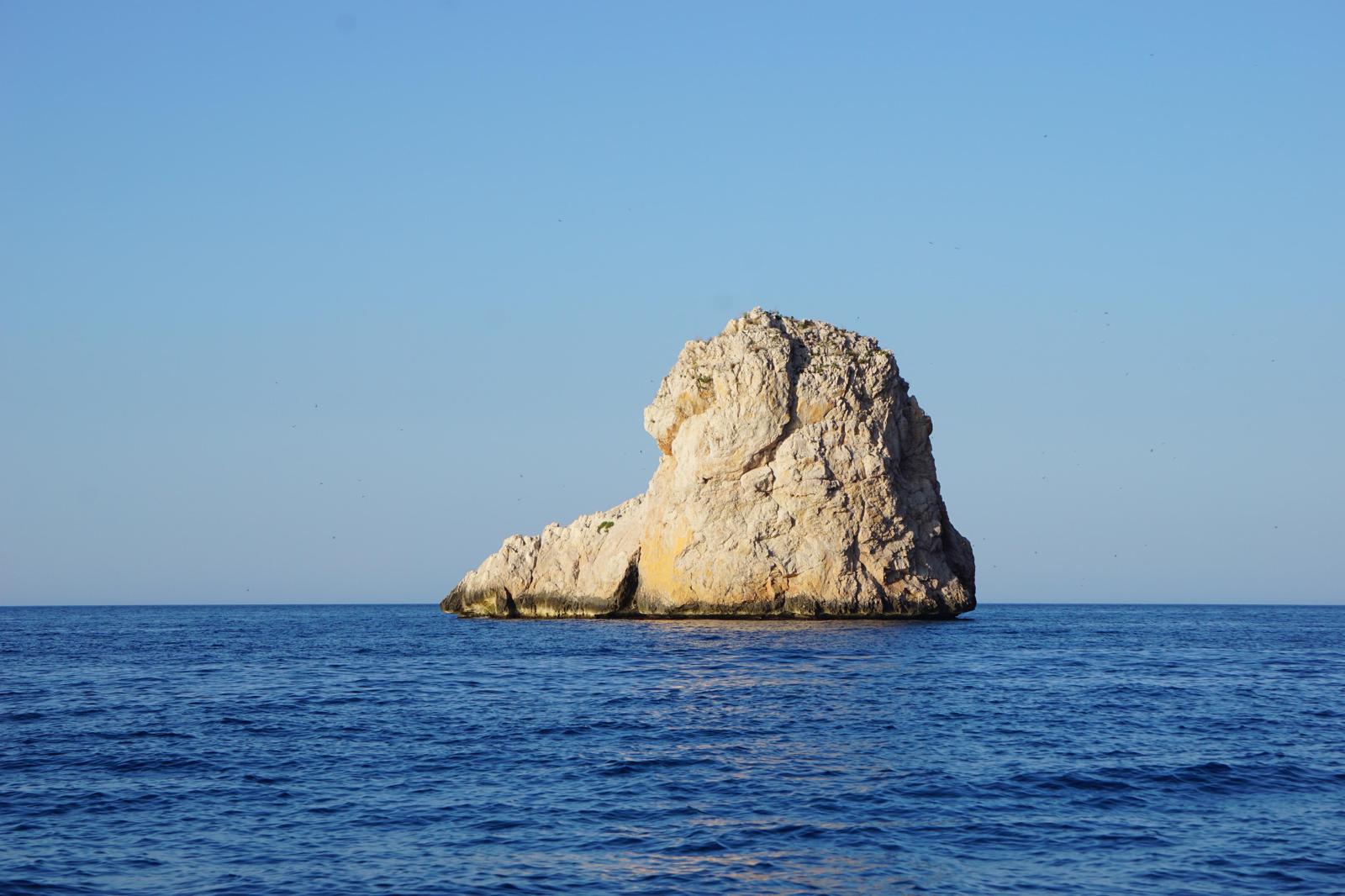
The rock formations of the Medes Islands, natural habitat of the grouper
Fascinating Facts About the Grouper
The grouper is a fascinating fish with unique characteristics:
🐟 Longevity
They are extremely long-lived animals. They can live over 50 years and reach impressive sizes, exceeding one and a half metres in length and 60 kg in weight. Their slow growth and maturation makes them especially vulnerable to overfishing—hence the importance of their protection.
🔄 Protogynous Hermaphroditism
One of their most astonishing traits is their ability to change sex. Groupers are born female and, as they grow and mature, some individuals transform into males. This sequential hermaphroditism is a reproductive strategy that optimises the success of the species.
🏠 Territorial Fidelity
They are highly territorial and sedentary fish. Once they find a cave or crevice they like, they tend to remain there for years, making them easy to observe for divers and snorkellers.
🤝 Friendly Behaviour
In marine reserves where they feel safe and undisturbed, groupers can become surprisingly curious and "friendly" with divers, allowing approaches that would be unthinkable in other areas.
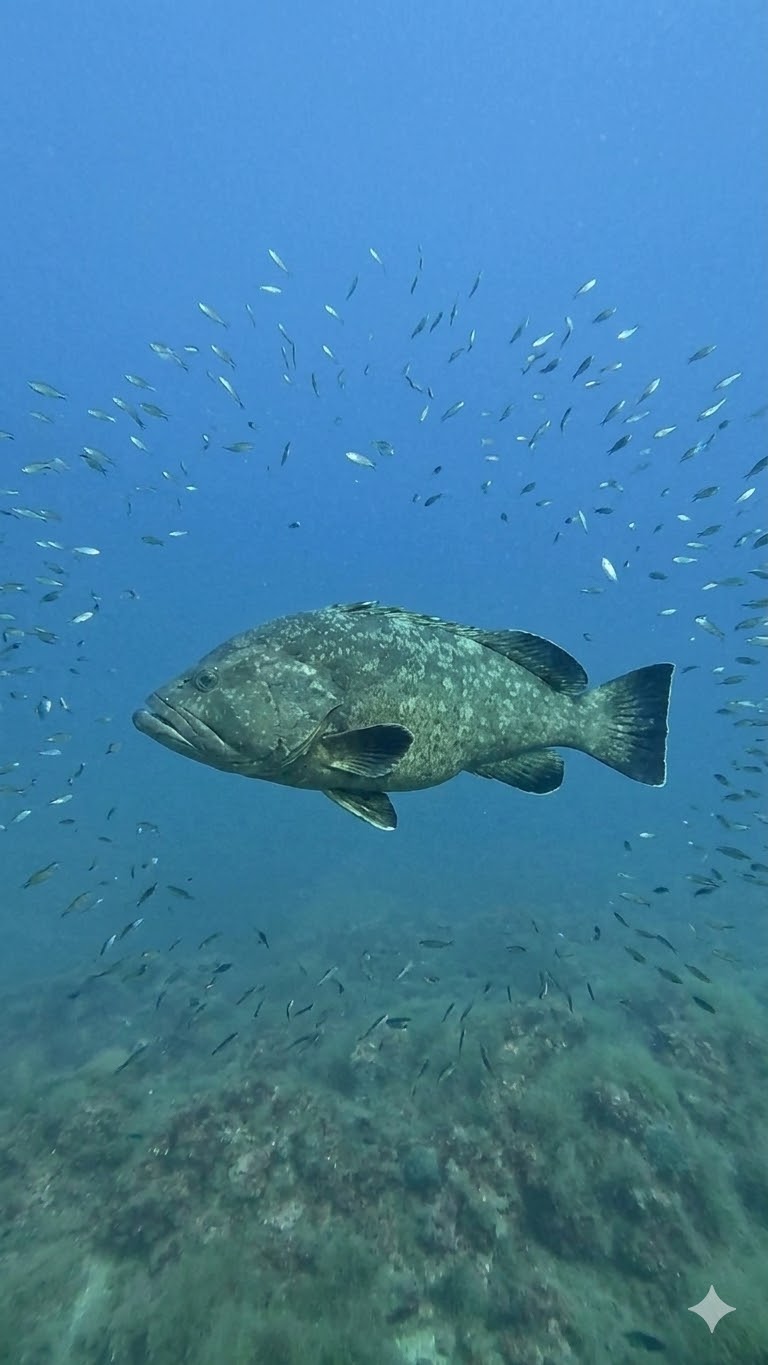
A grouper (Epinephelus marginatus) in its natural habitat in the Medes Islands
How to Spot Groupers in the Medes Islands
The good news is that you don't need to be an expert diver to have the chance of seeing these magnificent animals. Thanks to the clarity of the water and the shallow depth in some areas, it is possible to spot groupers while snorkelling.
Tips for Spotting
Patience and Calm
Groupers are curious but cautious. Move slowly and avoid sudden noises. Stay still near rocks or caves and wait. Often, their curiosity will bring them closer.
Rocky Areas
Look for areas with rock formations, crevices and small caves. These are their preferred habitats.
Respect the Environment
Remember you are in their home. Don't touch them, don't feed them and always maintain a respectful distance. Observation is key.
Ready to meet the king of the Medes Islands?
Book your trip with Bravola and get ready for an unforgettable underwater adventure!