
The Medes Islands, a jewel of the Mediterranean on the Costa Brava, are an archipelago of inestimable ecological value and a paradise for sea lovers. Beyond their impressive underwater biodiversity, these islands conceal secrets about their waters, the influence of currents and their crucial role in cetacean migration. In this article, we unveil these aspects based on official data and offer you practical advice to enjoy this unique environment.
Water Temperature Throughout the Year at the Medes Islands
Sea temperature at the Medes Islands, closely monitored from L'Estartit, varies significantly throughout the year, directly influencing marine life and water activities. Servei Meteorològic de Catalunya & Idescat
| Month | Average Surface Temp. (ºC) |
|---|---|
| January | 13,3°C |
| February | 12,7°C |
| March | 12,9°C |
| April | 13,9°C |
| May | 16,3°C |
| June | 19,7°C |
| July | 22,3°C |
| August | 23,2°C |
| September | 21,5°C |
| October | 18,9°C |
| November | 16,8°C |
| December | 14,5°C |
Reference period: 1991-2020
As can be seen, the summer months (July and August) offer the warmest temperatures, ideal for swimming and snorkelling, exceeding 22°C at the surface. Spring and autumn present milder temperatures, perfect for wetsuit diving. Even in winter, the temperature stays above 12°C, allowing underwater activities for the most adventurous.
Marine Currents: A Factor to Consider
The environment around the Medes Islands, with its underwater relief and strategic location, can generate marine currents that, while generally moderate, are an important factor for those practising diving or snorkelling. These currents are vital for the ecosystem, transporting nutrients and plankton, enriching the area's biodiversity. However, it is essential to:
- Always get informed: Before any aquatic activity, consult local dive centres or your skipper about current sea conditions and expected currents.
- Go accompanied: Especially if you lack experience in the area, it is advisable to undertake activities with experienced guides who know the particularities of currents at each dive site.
- Respect the signs: Buoys and signage exist for a reason; respecting them guarantees your safety and environmental conservation.
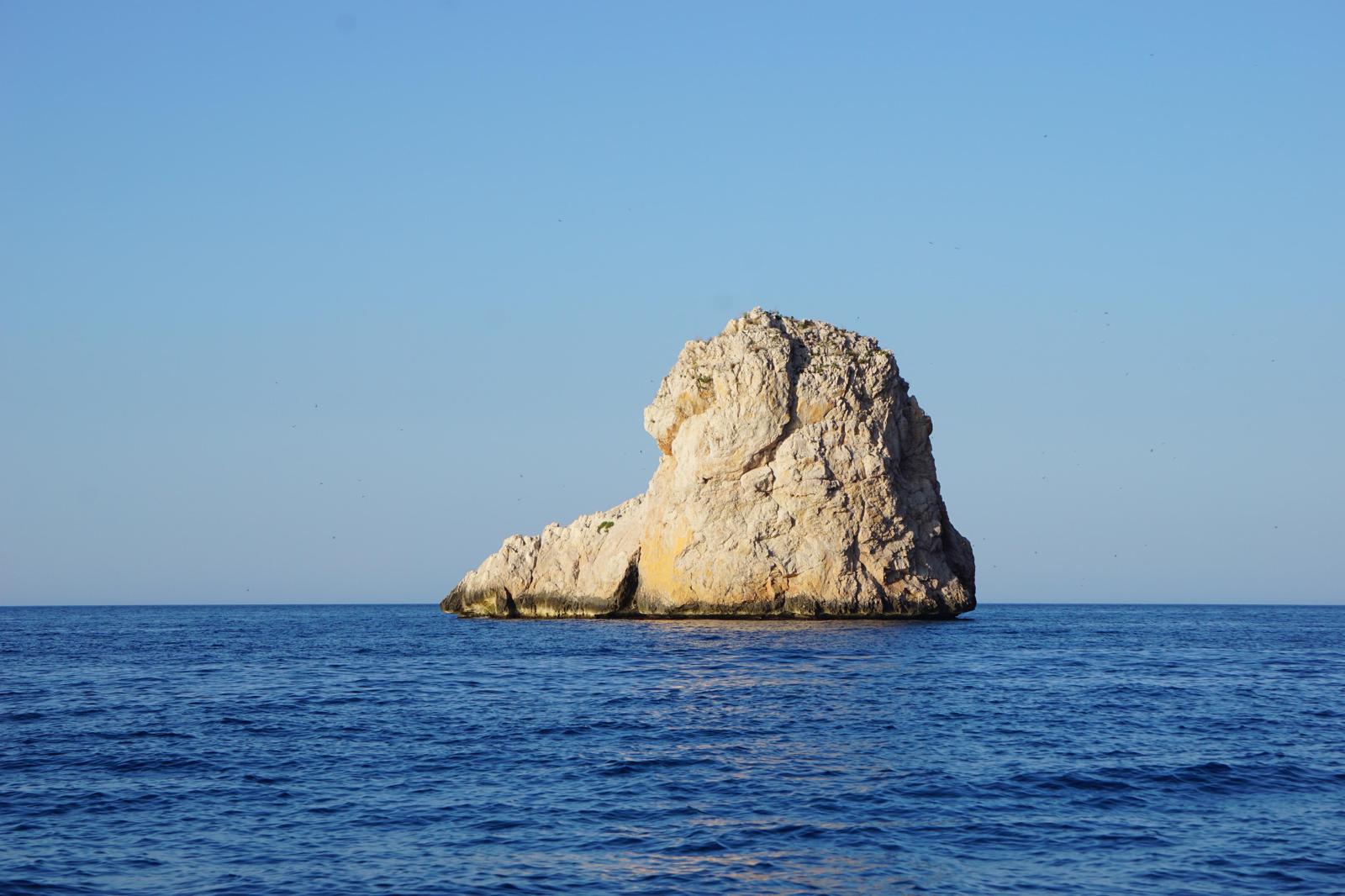
The Cetacean Migration Corridor: A Vital Passage Near the Medes
Perhaps one of the most fascinating aspects of this region is its proximity to the Mediterranean Cetacean Migration Corridor, declared a Specially Protected Area of Mediterranean Importance (SPAMI). This corridor, stretching from Cap de Creus in Girona to Cabo de la Nao in Alicante, is an essential migratory route for various cetacean species.
Although the Medes Islands are not directly within the corridor, their proximity to this important maritime route means it is not uncommon to spot species such as the striped dolphin (Stenella coeruleoalba), the common dolphin (Delphinus delphis) and even, occasionally, great whales such as the fin whale (Balaenoptera physalus).
Tips for Responsible Sighting
- Keep your distance: If you are lucky enough to spot cetaceans, never approach them. Observe from a safe distance and respect their space.
- Avoid noise: Engine noise can disturb their behaviour. Navigate at moderate speed and avoid sudden manoeuvres.
- Do not feed them: Never attempt to feed wild animals.
Practical Tips for Your Visit to the Medes Islands
- Book in advance: Especially during high season, excursions and activities tend to be in high demand.
- Respect the regulations: The Medes Islands are a Protected Natural Reserve. Learn about diving, snorkelling and navigation rules to contribute to their conservation.
- Appropriate equipment: Bring the necessary gear for water activities and sun protection.
- Local guides: Take advantage of local operators' knowledge to discover the best spots and ensure a safe and enriching experience.
The Medes Islands are a natural treasure that offers much more than scenic beauty. Understanding their oceanographic characteristics and their importance for marine life allows us to enjoy them in a more conscious and respectful way. Explore them and marvel at their secrets!
Sail to the Medes Islands with Bravola
Discover this natural paradise from the sea with our private charters. Sailboat, speedboat or classic boat: you choose how to explore the Medes.
References
- Servei Meteorològic de Catalunya. Temperatura del mar. meteo.cat
- Idescat. (2025). Agua del mar. Temperatura media. idescat.cat
- MITECO. (2018). El Corredor de Migración de Cetáceos del Mediterráneo declarado Área Marina Protegida. miteco.gob.es
- MITECO. ZEPIM: Corredor de migración de cetáceos. miteco-map.gob.es
- La Vanguardia. (2025). Espectacular avistamiento de delfines en las Islas Medes. lavanguardia.com