
Drawing an imaginary line along the coast from Cap de Begur to L'Escala, we are not only tracing one of the most spectacular shorelines of the Mediterranean. We are reading an open-air treatise on architecture, full of historical scars.
As an architect, sailing this maritime façade I can't help noticing how politics, war, speculation and necessity have shaped the landscape. Join us on this south-to-north journey through 10 key points.
1. Cap de Begur: the megastructure of the National Parador
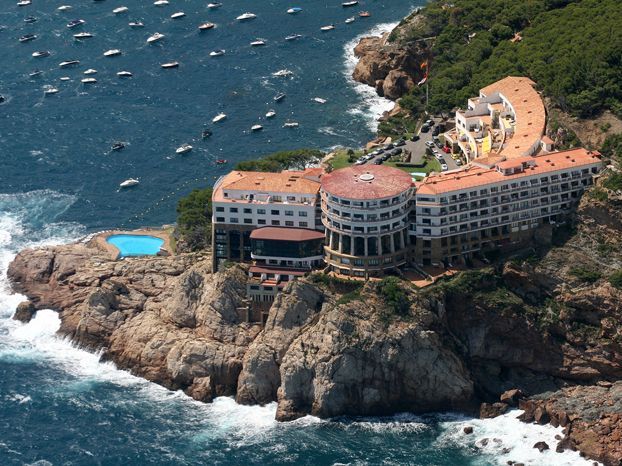
Looking up towards Aiguablava we find a white concrete cube embedded in the cliff. It is the Parador Nacional de Begur, designed under Franco's regime and inaugurated in 1966 by minister Manuel Fraga Iribarne. The goal was twofold: to boost international tourism and to plant a State architectural landmark on strategic territory. Architect Raimon Duran Reynals' original design tried to adapt typical Mediterranean architecture to the scale of a large state hotel.
2. Pals: the Cold War antennas
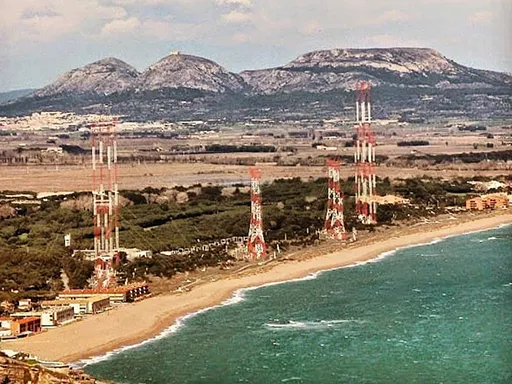
Leaving the Begur coves behind, the coast opens onto the long Pals beach. Until 2006 immense antennas stood here: Radio Liberty, a CIA-funded broadcaster from the Cold War era. Opened in 1959 under a secret agreement with Franco, it transmitted anti-communist propaganda towards the Soviet Union. An architecture not made to be inhabited but to transmit waves: a military complex hidden among pines that, now dismantled, leaves one of the few unbuilt zones of this stretch.
3. La Pletera: the seaside resort that never was
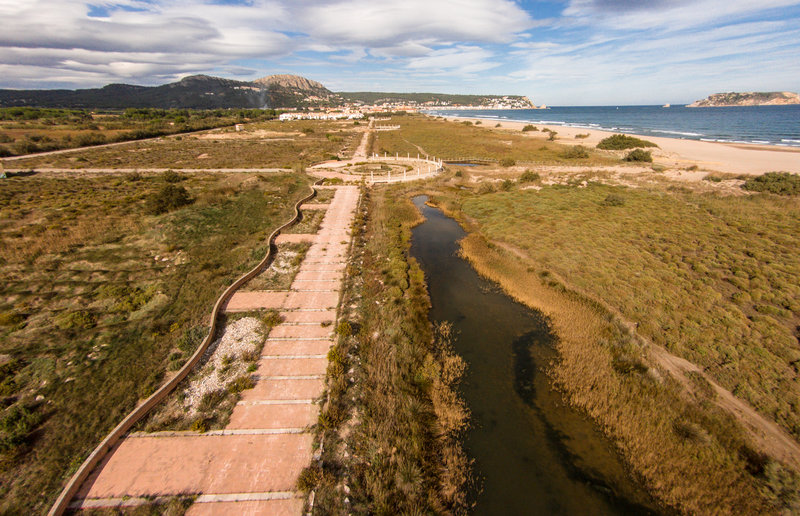
Further north we find the mouth of the river Ter and one of the most surprising urban episodes on the Costa Brava: La Pletera. It was meant to be a garden city by the sea for 12,700 inhabitants. The post-1992 Olympics crisis halted the works. Torroella de Montgrí town council then drove a process of de-urbanisation: between 2014 and 2018 the EU Life Pletera project demolished the unfinished promenade, removed the ruins and restored the lagoons and dunes. Today it is a natural seven-kilometre beach sheltering threatened species. The architecture of renunciation as an act of bravery.
4. L'Estartit: vertical urbanism of the 70s
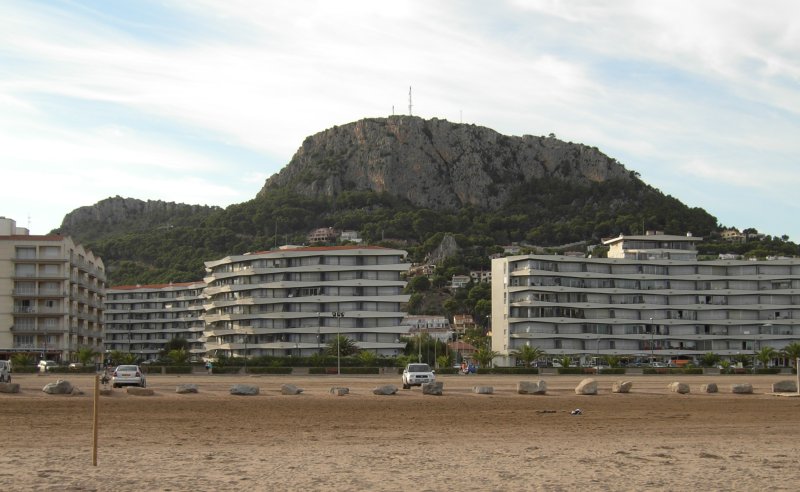
Arriving at L'Estartit hits us with a very different reality. With mass tourism, the seafront filled with tall apartment blocks chasing the maximum return per square metre facing the Medes Islands. The functional, dense developmentalist architecture completely transformed the old fishermen's quarter.
5. The hidden origin: a village hiding from pirates
The original Estartit was not on the seafront. The historic core was Torroella de Montgrí, inland. The reason? Fear. During the 16th and 17th centuries the Medes Islands were the perfect refuge for Turkish and Berber pirates raiding the coast. The few original buildings were fortified farmhouses with defence towers, hidden from direct sight of the sea to survive the raids.
6. The LORAN base: Americans on the Montgrí
L'Estartit holds another military secret. On the Alt de la Pedrosa, atop the Montgrí massif, the United States installed the LORAN (Long Range Navigation) base in 1961. This US Coast Guard station controlled maritime traffic in the western Mediterranean during the Cold War. The military architecture contrasted with village life, where Americans brought a touch of modernity and freedom in the middle of the dictatorship.
7. Les Freixes: the hexagonal brutalism of El Molinet
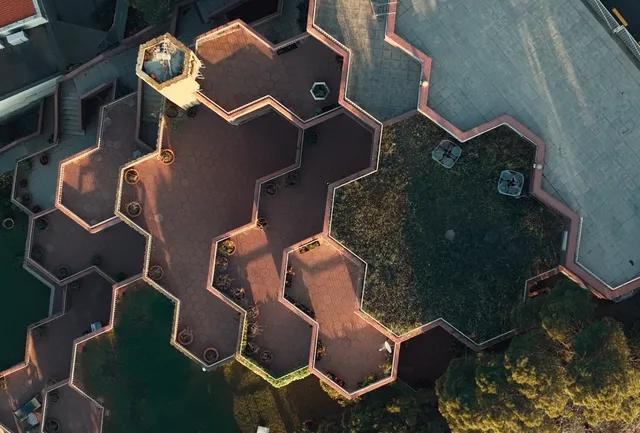
At the end of the Molinet promenade hides a building most visitors overlook: Les Freixes, one of the least-known architectural gems of the Costa Brava. Built in the 70s, in the post-dictatorship era, it is a pure example of Mediterranean brutalism: stacked hexagonal modules, exposed concrete and a clear commitment to fit the slope. Each hexagon is an independent volume adapting to topography, creating stepped terraces that dialogue with the cliffs. 3Cat's Animals Arquitectes programme dedicated a full chapter to it.
8. Blowing up 'La Bleda' to build the breakwater
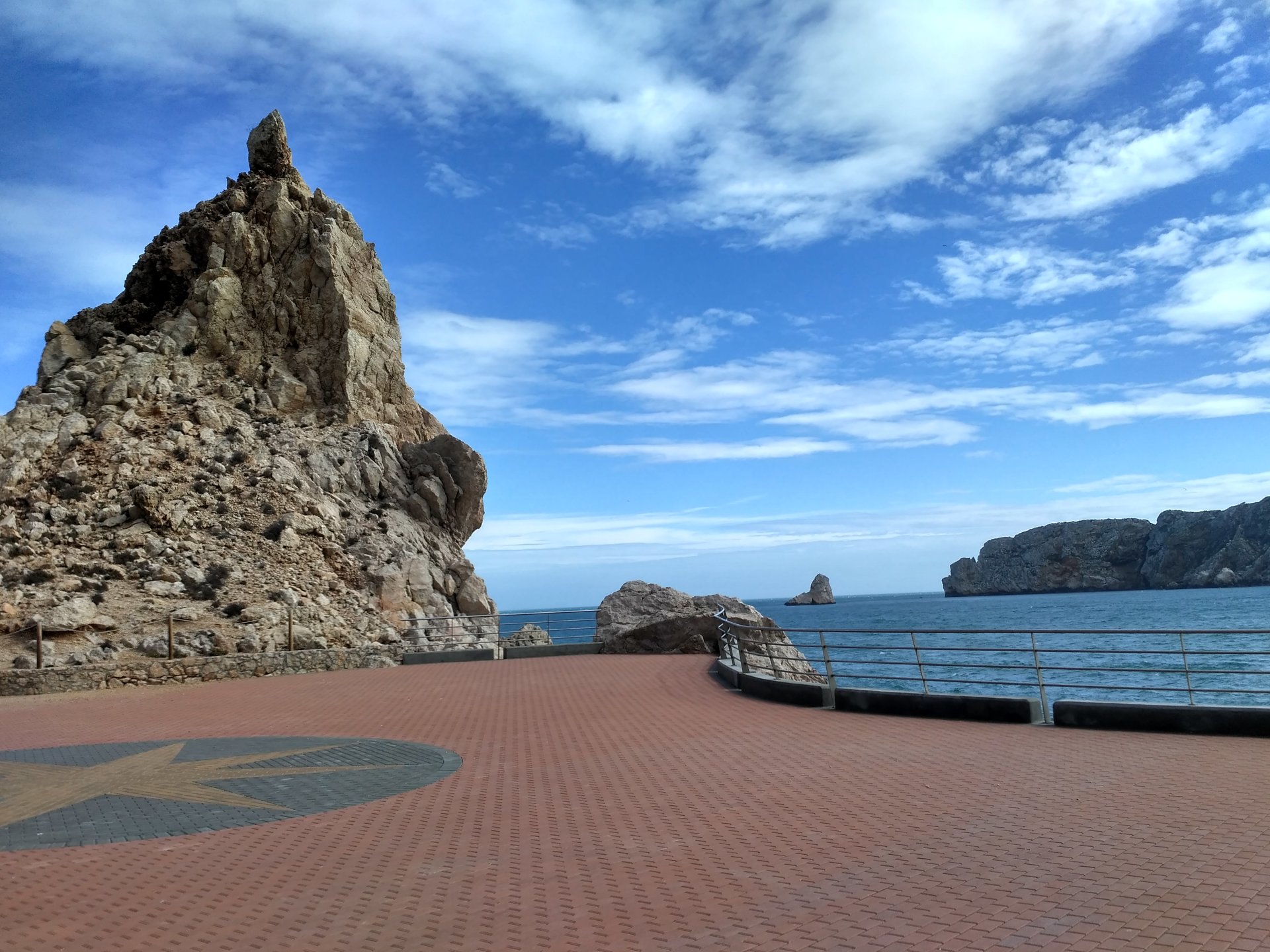
The Molinet story carries a deep scar. The rock many today call 'El Molinet' is in fact what remains of a much larger formation called 'La Bleda'. In 1947, to build the first breakwater of L'Estartit port, this massive rock was dynamited. Its stones were used as the base of the breakwater. Port architecture was made, literally, by devouring the natural landscape.
9. The Montgrí cliff line: the virgin coast
Past El Molinet and Punta de la Barra, an impressive stretch of coast opens up to L'Escala. Kilometres of limestone cliffs, caves like La Foradada and inaccessible coves (Cala Pedrosa, Cala Ferriol). It is the wildest coast, where vertical rock has prevented any building attempt. A reminder that sometimes the best architecture is the one topography makes impossible.
10. L'Escala and Sant Martí d'Empúries: the origin of it all
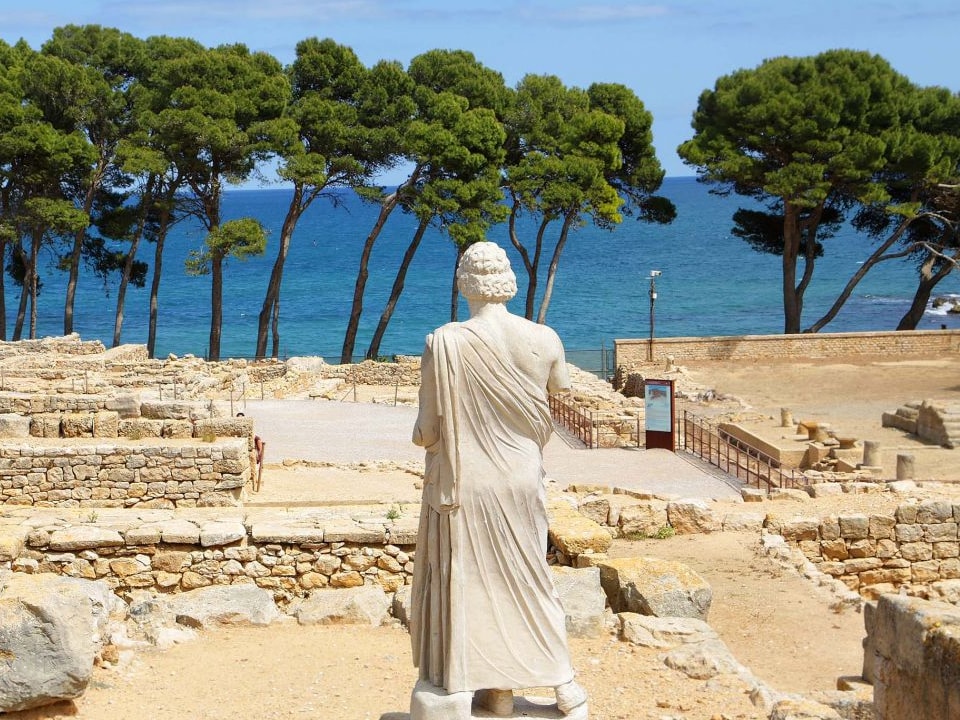
The journey ends in L'Escala. While L'Escala grew in the 18th and 19th centuries as a fishermen's quarter sheltered from the tramuntana, the true architectural jewel sits next to it: Sant Martí d'Empúries. This small walled village on a promontory was the original islet (the Paleapolis) where the Phocaean Greeks founded Emporion in the 6th century BC. The beginning of rational urbanism on the Iberian Peninsula.
From Francoism to the Greeks, through the Cold War, pirates and a development that de-developed itself, the maritime façade from Begur to L'Escala is far more than a pretty landscape. It is our history sculpted in stone and concrete.
Read the Costa Brava from the sea
Live this architectural route on board. Private charter from L'Estartit with professional skipper and local knowledge.